School holidays turn into workdays for Kenyan children as families struggle to survive
In Kenya, many children work in family businesses during school holidays to help cover food and school fees, easing parents’ burden but exposing them to exploitation and disrupted education.
More parents are increasingly involving their children in small-scale trading during school holidays as a strategy for survival.
From helping in family shops to selling goods at local markets, children are becoming an integral part of the household income.
While these roles offer much-needed support and expose young people to basic business skills, they also bring risks — including exploitation, unsafe work environments, and potential disruption to their education.
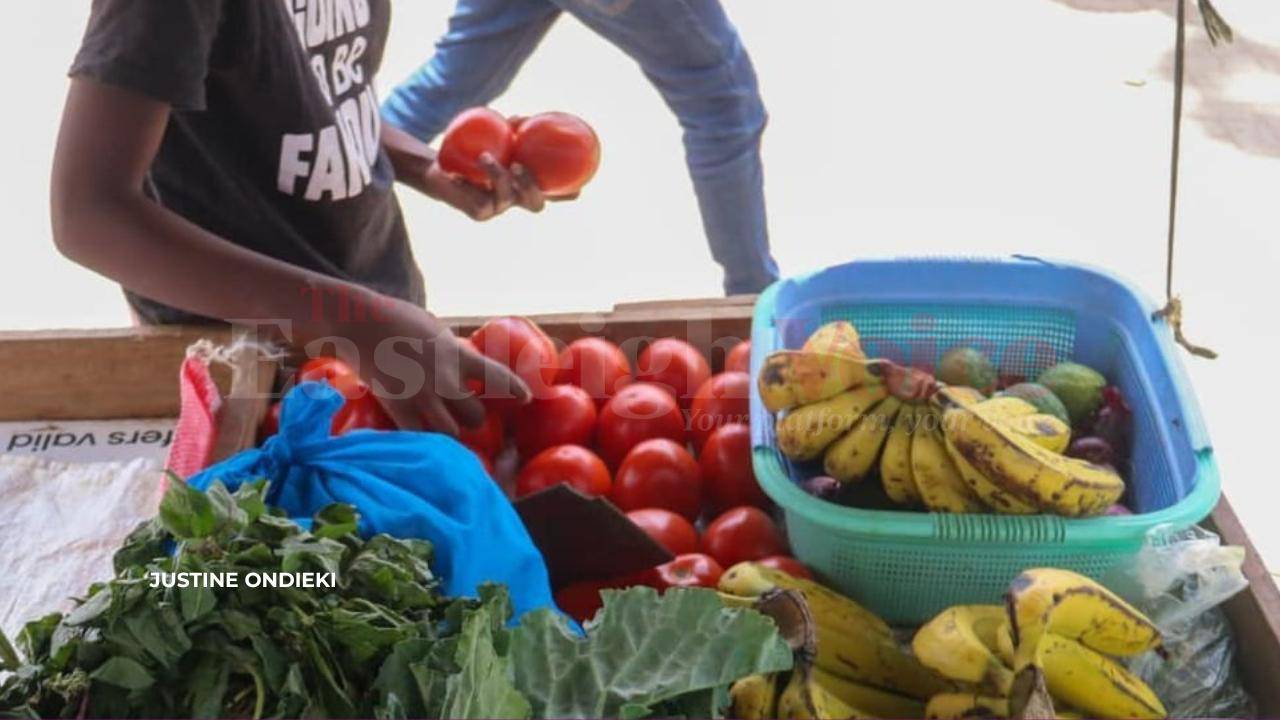
Mary Nzindoli, a mother of three girls and a vegetable vendor in Nairobi, illustrates this complex reality.
Sense of relief
For her, school holidays come with a sense of relief. With her daughters at home, she gains some breathing space and the reassurance that her small vegetable stall — set up just in front of their house — can keep operating even when she steps away to buy stock. Her youngest daughter, only nine years old, is particularly sharp and has a natural talent for business.
But behind the support her children provide lies a harsh economic truth: as a small-scale trader, Nzindoli cannot afford to close her stall, not even briefly. In an area with fierce competition, stepping away means losing customers. Her children fill that gap, ensuring the stall remains open and customers continue to be served.
“Most of the time, my children help me at the stall when I need to go to the market, and I can’t afford to close. Customers need to be served.”
Difficult situations
Yet the same children who help sustain the family sometimes face difficult situations — customers taking advantage of their innocence, bargaining aggressively, offering large notes they cannot break, or drawing them into tense negotiations.
Nzindoli has watched such moments unfold, frustrated but fully aware that this is part of the fragile balance she must maintain to survive.
Despite the risks, she takes comfort in knowing her daughters are close to home, within the neighbourhood, where she can monitor them. Their involvement not only supports the household but also teaches them resilience and responsibility.
Her experience mirrors that of many families across Kenya who rely on their children’s help during the holidays — not by choice, but out of necessity. For many households, income from small family businesses covers daily meals and school fees; without it, even basic needs may go unmet.
Delicate balance
This creates a delicate balance: children’s participation becomes essential for survival, yet their absence or inability to help could mean going hungry.
In some families, involving children in the business is also seen as a way to keep them from harmful behaviours such as substance abuse, making the work both a necessity and a form of guidance.
While children helping in family businesses can ease the parents’ burden and teach practical skills, the situation becomes riskier for teenagers. At that age, the line between responsibility and vulnerability can easily blur, exposing young people to manipulation or exploitation. This was the case for Ruth*.
From a very young age, Ruth regularly helped her mother run their small hotel, serving regular customers. Over time, she became so competent that her mother could leave the shop entirely in her hands during school holidays.
However, when Ruth turned 16, the dynamics began to change. Some clients started offering to buy her food or small gifts, and occasionally brought her presents.
Felt helpless
Alone behind the counter, Ruth often felt helpless, unsure how to react or set boundaries. What had once been a source of pride and learning was now exposing her to subtle pressures and growing risks.
Ruth’s mother was the family’s sole provider, and Ruth knew how hard she worked to keep the household going. Because of this, she felt unable to speak up when customers harassed her or behaved inappropriately.
“I didn’t want my mother to lose her clients,” Ruth recalls. “She always treated them kindly, and I didn’t want to ruin that. So, I played along with them, even when the harassment was bad—sometimes they even tried to touch me. I never reported it to my mum because I was afraid she wouldn’t believe me, or that she would think I didn’t want to help.”
Beyond the harassment and stress, she says the work took away much of her teenage life — the moments when she simply wanted to be a child.
“I don’t remember a time when I could just watch TV or play,” Ruth reflects. “I always had to step up and take responsibility, often at the expense of my studies and my own childhood.”
Primary source of support
Research shows that many small-scale traders cannot afford to hire additional help, so their children often become the primary source of support in running the business.
Years later, Ruth looks back on those moments as a painful but formative part of her adolescence, highlighting the hidden vulnerabilities facing young people working in family enterprises.
Evidence suggests that reducing poverty is the first and most crucial step in tackling child labour, as low household income is the strongest and most consistent driver of children entering work — often for long hours and in hazardous conditions.
While factors such as parental education, household size, land ownership, gender, and age also play a role, their influence varies widely across different communities.
In some contexts, higher parental education improves schooling outcomes, while in others it has little impact on children’s involvement in labour.
Household composition and land ownership can influence child labour differently depending on local realities, and socioeconomic status does not always predict the health outcomes of working children.
Economic realities
These findings indicate that policies seeking to end child labour will be ineffective if they ignore the economic realities families face.
While schooling initiatives and legal enforcement matter, they must be accompanied by efforts to boost household income and alleviate poverty.
Because influencing factors vary by context, interventions must also be tailored to the social, economic, and cultural conditions of each community. Local research and data are vital for designing targeted, effective strategies.
A recent study examined how childhood work affects physical and mental well-being. Reviewing 25 quantitative studies, the research found that working children face significantly higher health risks than their non-working peers.
Physically, they are more likely to experience malnutrition, stunted growth, wasting, delayed development, work-related injuries, respiratory illness, musculoskeletal pain, and chronic fatigue. The severity of these problems increases with longer working hours and more hazardous working conditions.
The study also documented serious mental and psychosocial impacts. Working children are more prone to emotional and behavioural challenges, anxiety, and mood disorders.
They face a greater risk of abuse and exploitation, and often struggle with low self-esteem, poor coping abilities, and social difficulties.
Taken together, hazardous work environments and limited access to education contribute to long-term psychological stress and reduced overall well-being.
Top Stories Today